Feeling Scale
Target Age Group:Any age
Objective: To aid the teacher in understanding how students are feeling in an accessible and noninvasive way for students.
Why it Works
- Discreet: Students think it is just a fun question and will not realize they are actually being valuable by sharing their emotions
- Accessible: Young students do not always know how to verbalize their emotions, especially when they go through something traumatic, using this technique gives you the information they may not be able to verbalize explicitly so they can get help.
- Mindfulness-Based: Helps students think about their feelings and identify them.
- Universal & Simple: Requires minimal materials and can be used in any class.
Instructions:
Asking an opening class question to understand a student's feeling can help the teacher meet the student at the same level, gauge how the student is doing outside of the classroom, and get the student to reveal their feelings without needing to find the words themselves. They are able to use the images or questions to better express their feelings that they may not be able to put into words.Step 1: Pick an image or question, Example questions:
- What color do you feel like today?
- What type of weather are you today?
Step 2: Ask the students for their response
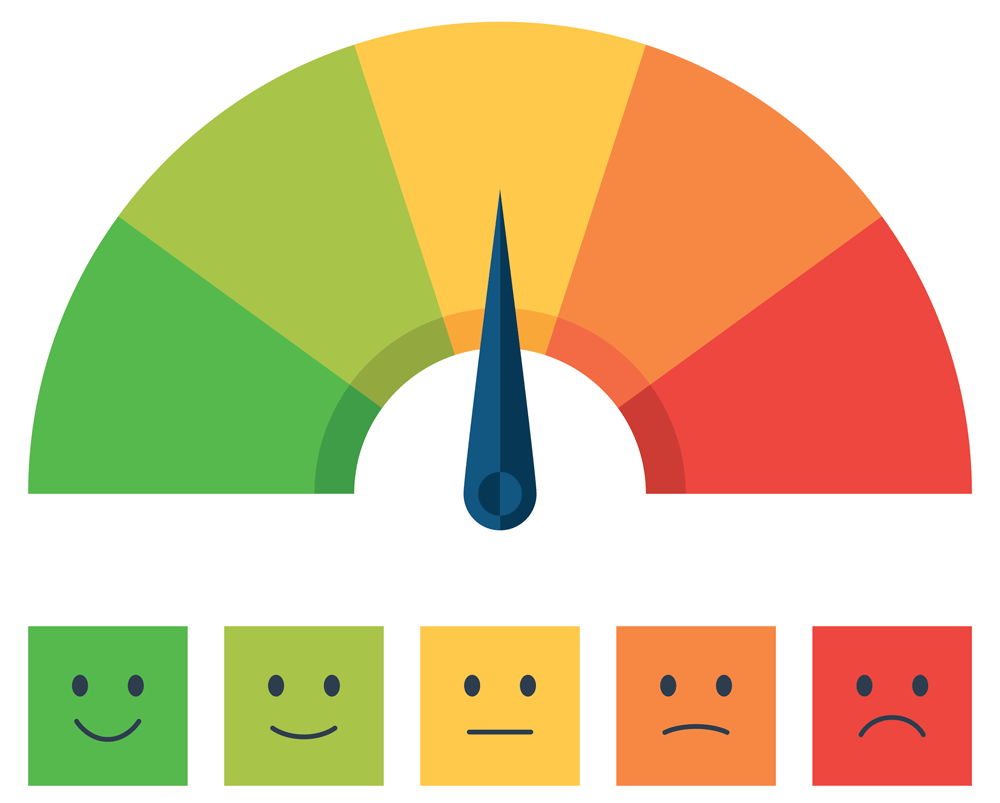
When beginning the class, such as when doing attendance, ask each student to answer the question. They can say their answer out loud or write their answer down on a small piece of paper for the teacher to collect. If using an image with a scale of feelings, ask students to raise their hand with the amount of fingers up to represent which image they resonate with.
Step 3: What to do with the results:
Make a note of the students that seem to be off or having a bad day based on the question (ex. A student saying they feel "gray" or "cloudy") If concerning - take some time to talk to them separately or send them to a counselor if necessary.
Suggestion:
If many students seem to be having a hard day, take some class time to follow up with another technique to help students reduce stress.